CEP - Supporting Those Who Support Others: Highlights from the Third City-Wide Networking Event
Supporting Staff, Strengthening Communities
More than 70 people from across Belfast's community, voluntary and public sectors came together on 24 September to explore the role of trauma-informed practice in supporting staff wellbeing, strengthening organisations and improving outcomes for communities. The event focused on an issue that resonates across many organisations: how we create workplaces where staff and volunteers feel supported, valued and able to thrive while supporting others through often challenging circumstances.
The Community Empowerment Programme is being delivered by the Northern Ireland Council for Voluntary Action (NICVA) and a network of community partners from across Belfast. It is one of the six key projects which are being delivered as part of the Belfast PEACEPLUS Local Community Action Plan. This project is supported by PEACEPLUS a programme managed by the Special EU Programmes Body (SEUPB)
Connection and Creating Cultures of Care
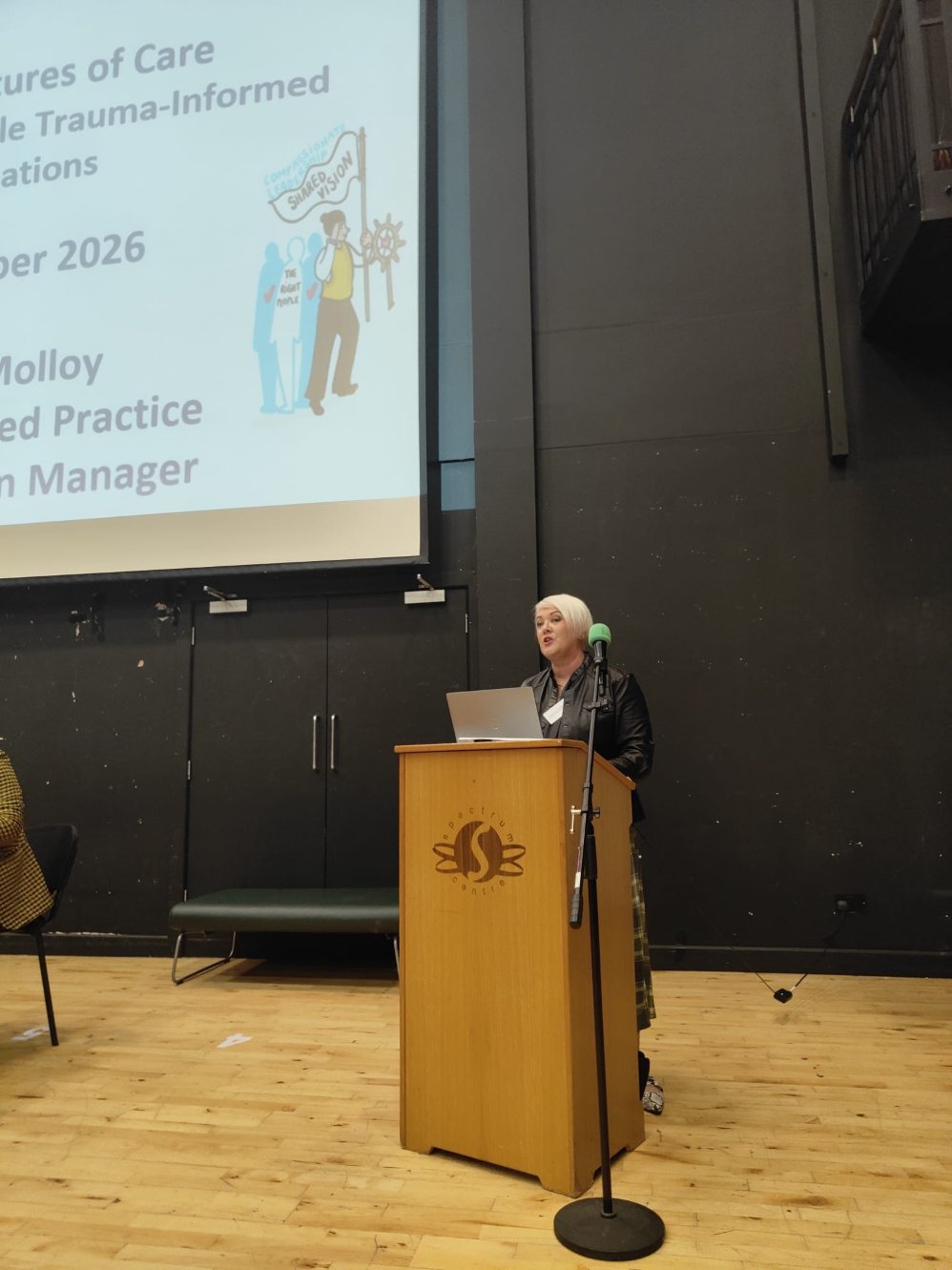
Opening on behalf of the CEP Partners, Fiona Molloy from Forward South Partnership reflected on the collaborative approach that underpins the programme and the importance of creating meaningful connections across communities and organisations. She encouraged delegates to take away "not just new learning, but that feeling that we get when the conversations have allowed us to connect with others in truly a meaningful way."
The day began with a keynote address from Marian Molloy, one of six Implementation Managers with the Trauma Informed Practice Team for the Safeguarding Board for Northern Ireland (SBNI). Marian challenged the room to think about what it means to create cultures where people feel safe, connected and valued. Her presentation explored the relationship between leadership, psychological safety and wellbeing, providing a practical framework for organisations looking to strengthen their approach. She introduced the six principles of trauma-informed practice and encouraged everyone to reflect on how these principles can be embedded across their organisations and services.
"One of the most powerful things any organisation can do is create a culture where people feel that they matter."
Marian Molloy, Safeguarding Board NI
Time to Reflect and Share
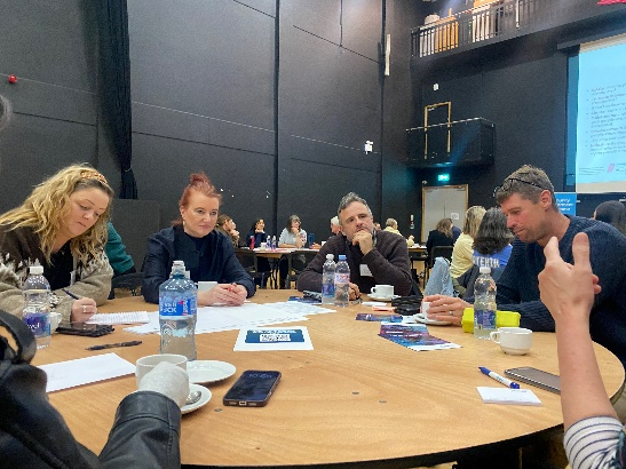
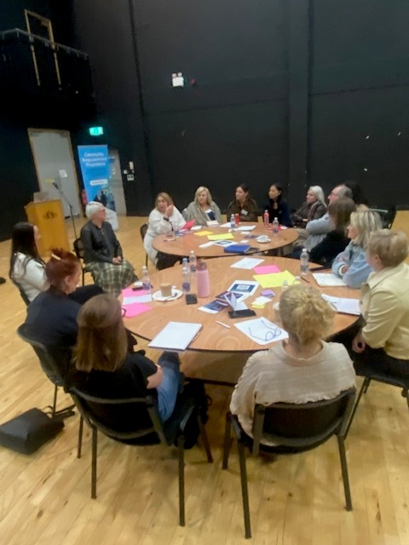
One of the most valuable aspects of the event was the opportunity for conversation. Roundtable discussions followed the keynote address and gave people space to reflect on their own experiences, exchange ideas and consider what would help strengthen support for staff and volunteers within their own settings. Participants spoke openly about what is working well, where challenges remain and the changes they would like to see in the future.
The discussions highlighted both the progress that many organisations have already made and the common challenges they continue to face. Topics such as psychological safety, supportive leadership, staff wellbeing, supervision and organisational culture featured strongly across the tables. Participants shared practical examples from their own organisations, explored barriers to change and identified the support they need to strengthen wellbeing and create positive working environments for staff and volunteers. The conversations also reinforced the value of peer learning and creating opportunities for people to learn from one another's experiences.
"This event was fantastic as a knowledge update for leaders and managers and also a great opportunity for networking and making new connections."
Jenny Bowden, Shankill Sure Start
The conversations reinforced the need for continued learning, leadership commitment and opportunities to share experiences with others, while highlighting the value of working together to create cultures where people feel safe, valued and supported.
Learning from the Journey
A panel discussion featuring speakers from Derry Well Women Centre, The Salvation Army, Extern, Victim and Survivor Services and the Northern Health and Social Care Trust built on these themes, sharing honest reflections on the opportunities and challenges of embedding these approaches in day-to-day practice. One of the most valuable aspects of the discussion was hearing from organisations that have been working in this space for a number of years. Their experiences highlighted that creating a trauma-informed culture does not happen overnight and cannot be achieved through training alone. It requires ongoing commitment, leadership, reflection and a willingness to continually learn and improve as organisations respond to the needs of their staff, volunteers and service users.
Taking Ideas Back into Practice
The afternoon workshops focused on staff wellbeing, emotional intelligence and understanding secondary vicarious trauma. Each session encouraged discussion and reflection while providing practical tools that people could take back to their teams and organisations. Alongside exploring key concepts, attendees were encouraged to consider what small changes could make a difference within their own settings, recognising that creating healthier workplace cultures often begins with everyday conversations, behaviours and relationships.
"Trauma-informed practice is a real and human approach for nurturing inclusivity."
Jo Lamont, Beat Carnival"I loved the format of the day. The combination of the keynote, panel discussion, workshops and facilitated conversations was incredibly engaging and created lots of opportunities for meaningful discussion. I feel much more motivated and confident to think about how we can continue to become more trauma-informed in all of our interactions."
Sinéad Tumelty, NI Chest Heart and Stroke
Looking Ahead
The event highlighted something that many organisations already know: caring for communities starts with caring for the people who support them.
By bringing people together to share experiences, challenge thinking and learn from one another, the day created space for important conversations about leadership, wellbeing and organisational culture. Most importantly, it reinforced the value of connection, collaboration and continuing to learn together as we work towards stronger, healthier and more supportive workplaces across Belfast.
As the event drew to a close, one message continued to resonate throughout the conversations, presentations and workshops. As Marian Molloy reflected:
"Relationships matter. At the heart of a trauma-informed approach is the understanding that meaningful, trusting relationships create the conditions for safety, healing, growth and wellbeing."
Marian Molloy, Safeguarding Board NI
Thanks
Thanks to everyone who attended and contributed to the event, including our CEP Partners, the speakers, panellists, workshop facilitators and support staff who helped make the day possible:
- Marian Molloy – Safeguarding Board NI
- Jane Braiden - Extern
- Rhonda Murphy - Derry Well Woman
- Dawn Richardson - Salvation Army
- Karen Morgan - Victim & Survivors Services
- Dr Ciara Downes – NHSCT
- Roisin Kelly – NICVA
- Jennifer Turtle – Ascert Training
- Spectrum Centre Staff and Ability Café
- NICVA Staff
CEP Partners
- Forward South Partnership
- Greater Shankill Partnership
- EBCDA
- Falls Community Council
- Marrowbone Community Association
- West Belfast Partrnership Board
Get Involved in the Community Empowerment Programme:
If you’d like to:
- Get involved in your local area
- Gain skills and experience
- Work with others to make change happen
- Or just want to find out more….
Please contact Susan Glass, Programme Coordinator: susan.glass@nicva.org